MSME benefits in government tenders

If you run a Micro or Small enterprise, the government's procurement rules are deliberately tilted in your favour — and most small bidders never claim what they're owed. Register once and you can bid with no EMD, free tender documents, a guaranteed 25% share of public procurement, a price cushion against bigger rivals, and relaxed eligibility. This guide lays out every benefit, who qualifies, and exactly how to claim each one when you bid.
- No EMD and free tender documents for registered Micro & Small Enterprises (MSEs).
- 25% procurement reservation for MSEs — within which 4% for SC/ST-owned and 3% for women-owned MSEs.
- Purchase / price preference: quote within L1 + 15% and you can match L1 to supply a share (up to that 25%).
- Relaxed eligibility — prior-turnover and experience conditions eased for MSEs and exempted for recognised startups.
- To qualify: a valid Udyam (or NSIC) registration, with the tendered item covered by it.
Who qualifies — MSE, not just "MSME"
This is the detail that trips people up. The core procurement preferences flow from the Public Procurement Policy for Micro & Small Enterprises (MSEs) Order, 2012 — so they're for Micro and Small enterprises. Medium enterprises are MSMEs too and get other support, but the EMD waiver, 25% reservation and purchase preference are MSE benefits.
| Category | Investment in plant & machinery | Annual turnover | Procurement preferences? |
|---|---|---|---|
| Micro | up to ₹2.5 crore | up to ₹10 crore | Yes (MSE) |
| Small | up to ₹25 crore | up to ₹100 crore | Yes (MSE) |
| Medium | up to ₹125 crore | up to ₹500 crore | No (not an MSE) |
To actually claim the benefits, three things must hold:
- You hold a valid Udyam Registration (which replaced Udyog Aadhaar) — or an NSIC Single-Point Registration.
- The tendered item / work is covered by your registration (you can't claim a preference for something you're not registered to supply).
- You submit the valid registration certificate with your bid.
The benefits at a glance
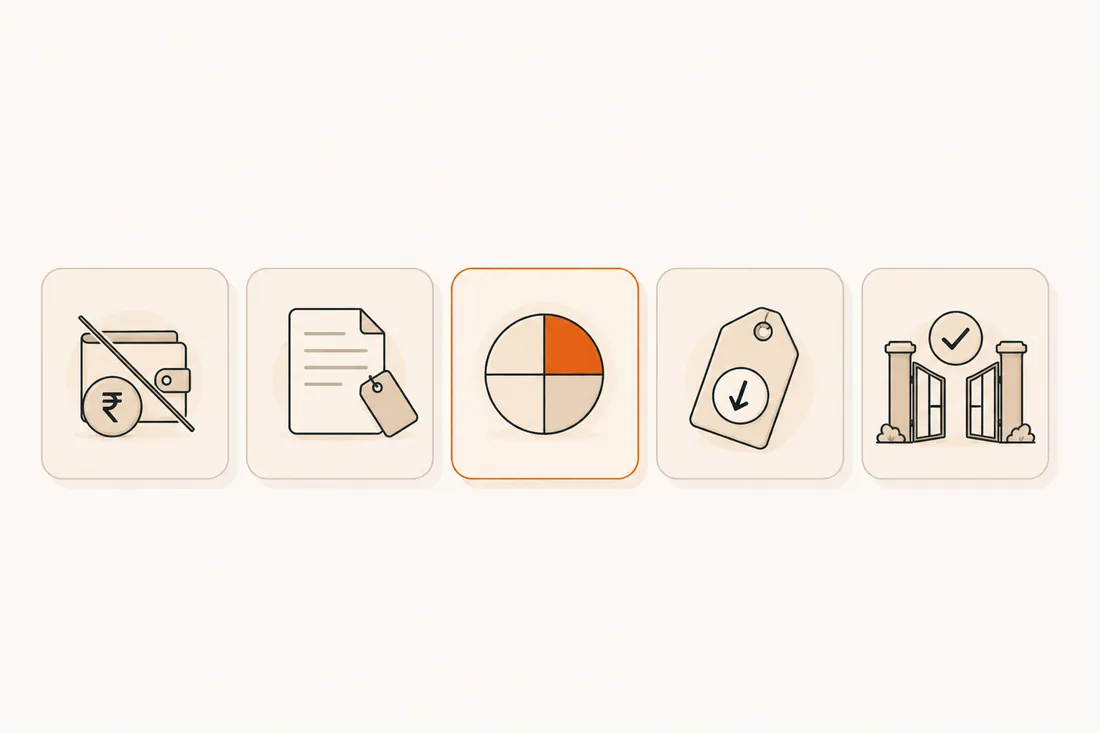
| Benefit | What you get |
|---|---|
| EMD exemption | No Earnest Money Deposit on bids. |
| Free tender documents | Tender sets / documents provided free of cost. |
| 25% reservation | A guaranteed minimum share of annual procurement set aside for MSEs. |
| Sub-targets | 4% for SC/ST-owned and 3% for women-owned MSEs, within the 25%. |
| Purchase preference | Match L1 to win a share when you bid within the L1+15% band. |
| Relaxed eligibility | Prior-experience and turnover criteria eased; exempted for recognised startups. |
| Reserved items | A list of items reserved for exclusive purchase from MSEs. |
EMD & tender-fee exemption
The most immediate saving. Under the procurement policy and the General Financial Rules, registered MSEs are exempt from furnishing EMD / bid security, and the tender documents are free. Across a year of bidding, the EMD that would otherwise be locked up — often lakhs per high-value tender — stays in your working capital.
You don't pay and reclaim; you claim the exemption up front by attaching your Udyam/NSIC certificate in the technical cover. (New to EMD itself? See what EMD is and how it works →.)
The 25% procurement reservation
Central Government Ministries, Departments and CPSEs must procure at least 25% of their annual requirement from MSEs. It isn't charity — it's a hard target the buyer is measured against, which is why MSE participation is actively encouraged. Within that 25%:
- 4% is earmarked for MSEs owned by SC/ST entrepreneurs.
- 3% is earmarked for MSEs owned by women entrepreneurs.
Separately, a defined list of items is reserved for exclusive purchase from MSEs. Together these mean a meaningful slice of public demand is, by rule, pointed at small enterprises.
Purchase preference — the L1 + 15% rule
The benefit that lets you win even when you're not the cheapest. Worth understanding precisely.
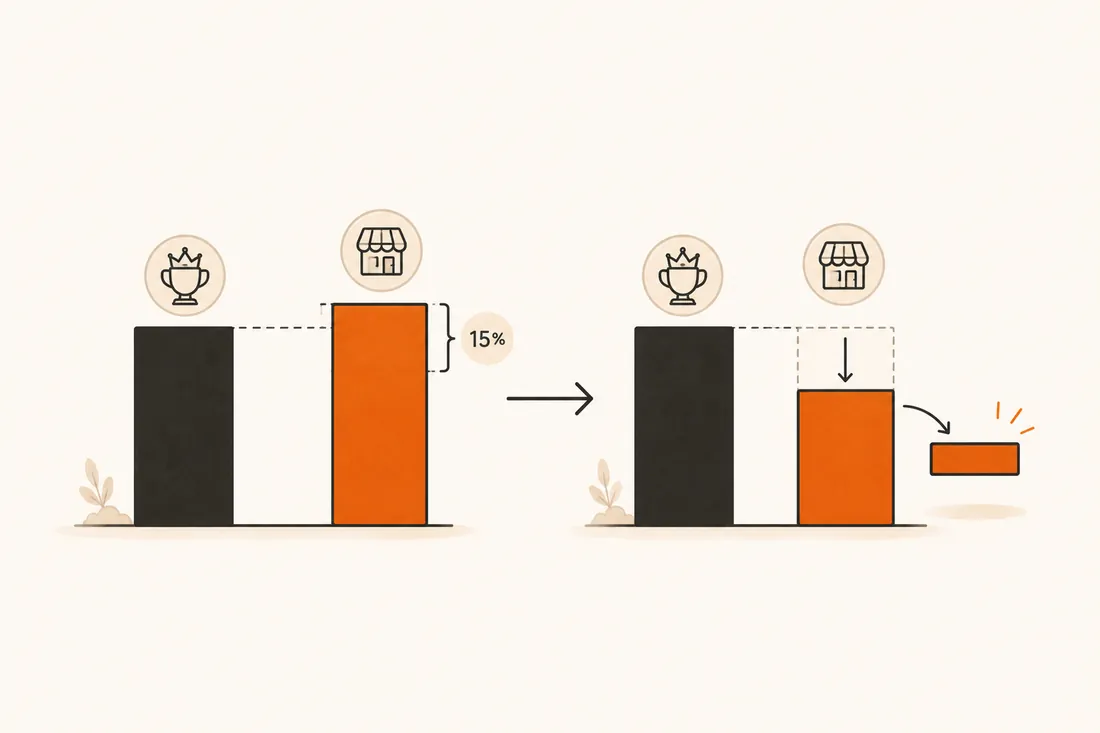
When the lowest bidder (L1) is not an MSE, any participating MSE whose quote is within the L1 + 15% band (i.e. not more than 15% above L1) is given a chance to match the L1 price and supply up to a 25% share of the tendered quantity. If several MSEs qualify, that share is divided among them.
In plain terms: you don't have to be the absolute cheapest to walk away with business — you have to be close (within 15%) and willing to match. For a small firm competing against larger players on price, that 15% cushion is often the difference between winning a slice and winning nothing.
Relaxed eligibility & startups
Small and new firms are often locked out by prior-turnover and prior-experience requirements. The rules relax these:
- MSEs: prior-experience and turnover criteria are eased so smaller firms can qualify for tenders they'd otherwise be ineligible for.
- Recognised startups (DPIIT): exempted from prior-experience and prior-turnover requirements (subject to meeting quality and technical specifications) — a major door-opener for first-time bidders.
How to claim the benefits
The benefits are real but not automatic — you claim them, with documents, in the bid.
States, GeM & the fine print
- Central vs state: the 25% policy applies to Central Ministries/Departments/CPSEs. States run their own MSE preference policies, which differ — check the specific state's rules for state tenders.
- GeM: MSE benefits (and filters to find MSE-friendly bids) are built into the GeM marketplace too. See how to register & sell on GeM →.
- Delayed payments: beyond tenders, MSEs get statutory protection on delayed payments (the MSME Samadhaan mechanism) — a separate but valuable benefit of being registered.
Find tenders where your MSE edge counts
70,000+ live tenders across 30+ portals — filter by sector, state, value and work type, free, no login.